Resumes Lie Better Than Ever. Here Is Exactly Where They Get Caught
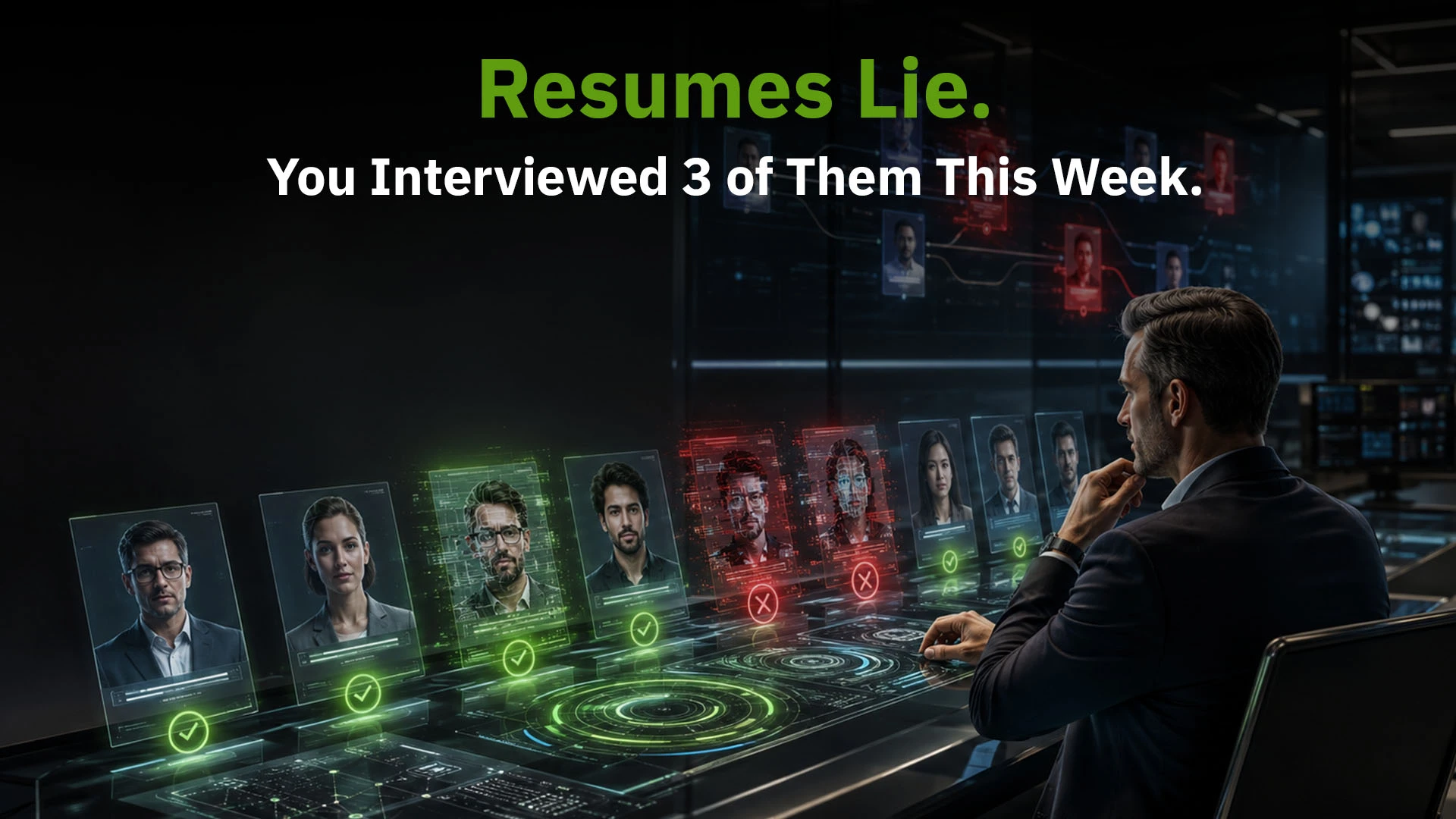
Every Shortlist Your Hiring Team Built This Year Had Liars in It.

Here is the count: 106. That is exactly how many ways a resume can misrepresent who a candidate actually is. Inflated titles. Fabricated tenures. Companies that never existed. Skills listed for tools they have never opened. AI did not invent any of these. It just made all of them faster, cleaner, and invisible to everything the hiring industry built to catch them.

Think about the last shortlist your hiring team built.

Every name on it came from a resume. Every resume came from a candidate who wrote it, or more likely, had AI write it for them. The claim about experience, title, tenure, and skill went through your screening process at whatever speed your tools operate. And the question nobody asked at the start of that process: is any of this actually true?

That question is not abstract anymore. Resume fraud and resume misrepresentation are documented, widespread, growing problems. The BBC reported on North Korean IT workers running organized candidate fraud operations that cleared standard US hiring pipelines using AI-generated professional identities. The Guardian covered the AI resume arms race where candidates use AI to fabricate experience and companies use AI to process it faster without catching it. Forbes attached a cost number: bad hires at the mid-level cost companies more than 30 percent of first-year salary once you count everything. Gartner projected AI-assisted applications would represent more than one in four submissions industry-wide by 2028 and the rate moved faster than that.

Resumes lie. They have always lied. AI made them lie better and made the standard tooling worse at catching it.

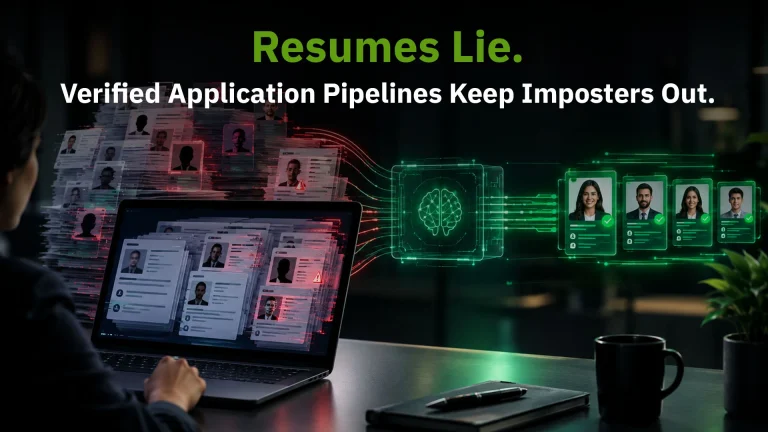
Octagnt exists to fix the shortlist at the source. The fix happens at the application stage.

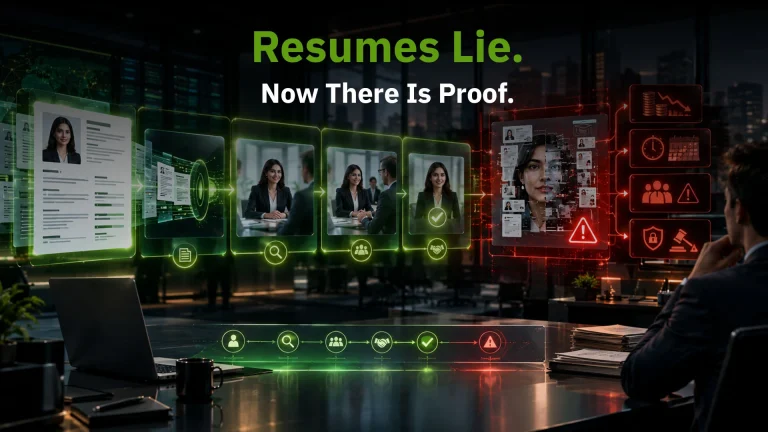
Octagnt verifies before any evaluation begins. It checks whether the person behind the resume is real and professionally coherent: live email addresses, confirmed phone numbers, consistent LinkedIn histories, employment history anchors that match real-world data. Candidate fraud, ghost applicants, and fabricated identities never make it to the evaluation phase.

Octagnt validates after verification. Every resume claim runs through 106 data points across nine forensic dimensions with 21 specialized agents doing the analysis. Resume embellishment, inflated titles, fabricated company credits, padded tenures, and overstated skill sets all get surfaced with evidence before anyone builds the shortlist.

The shortlist that comes out is honest. Every candidate on it is real. Every claim behind them is checked. The team can defend every decision with an audit trail.

Faster is easy. Honest is the hard part. Octagnt does the hard part.

Try a Live Role for Free Now

Frequently Asked Questions (FAQs)

Why can’t a standard ATS catch resume fraud on its own?

Standard ATS tools rank and filter candidates based on keyword match and formatting. They process what a candidate submits at face value. They are not built to verify whether any of it is true. AI-generated resumes are specifically designed to score well inside these systems, which means the better the AI tool a candidate uses, the higher they rank in a process that was never built to question their honesty.

What is the difference between how Octagnt verifies and how it validates?

Verification answers one question: is this person real? Octagnt checks emails, phone numbers, LinkedIn profiles, and employment history signals to confirm a real, professionally coherent person submitted the application. Validation answers a different question: are their claims true? Octagnt runs every resume claim through 106 data points across nine forensic dimensions to surface resume embellishment, inflated titles, fabricated company credits, and overstated skills. Both happen at the application stage, before any human review begins.

How widespread is resume misrepresentation in the AI era?

Gartner projected that more than one in four job applications would be AI-assisted by 2028, and that rate moved ahead of forecast. The BBC documented organized candidate fraud operations using AI-generated professional identities that cleared standard US hiring pipelines. Forbes reported bad hire costs running above 30 percent of first-year salary. Resume misrepresentation is no longer an edge case. It is a market-wide condition that standard hiring tools were not built to handle.

At what stage does Octagnt catch resume fraud and candidate fraud?

Octagnt catches resume fraud and candidate fraud at the application stage, before a shortlist is built and before any recruiter invests time in evaluation. This is the critical difference from background checks or reference calls, which happen after significant time and money have already been spent. By the time traditional processes catch misrepresentation, the cost is locked in. Octagnt stops it at the door.
Share this article

← Back to all articles

Ron Maitra

Ron Maitra is the CEO and Founder of Octagnt.ai. He writes about the hard problems in hiring — resume fraud, deepfake interviews, AI's erosion of trust, and what verification-first recruiting looks like as a fix.

LinkedIn