Why Application Stage Verification Has Become Non-Negotiable for Recruiters
Why Your Hiring Process Fails Resume Fraud Detection

The resume at the top of your applicant queue might not represent a real person. Not as a hypothetical. As a documented pattern in 2026. Gartner projected in 2025 that 25% of all job applications worldwide could be fake by 2028. Most companies still run tools designed for a simpler problem, and none of those tools audit the document they trust most.

Resumes lie. They always have. The part that changed is how well they lie. Resume embellishment used to mean inflating a title one notch. Resume misrepresentation in 2026 means building a professional identity from scratch, using stolen credentials and employment histories that never happened. The person applying today can look more qualified than someone who spent years actually becoming qualified.

In April 2026, Fortune reported that North Korean operatives had been hired at more than 100 American companies, including Fortune 500 firms. They used forged documents and fake LinkedIn profiles and passed every standard screen. Several accessed restricted company data. That is candidate fraud operating at a scale most hiring teams were not built to detect.

The cost lands hard. Bad hires typically run 30 to 150 percent of the annual salary for that role. In regulated industries, one misrepresented credential becomes a legal and compliance event. Every fraudulent hire takes real time and real money to unwind, and the problem starts before the first conversation.

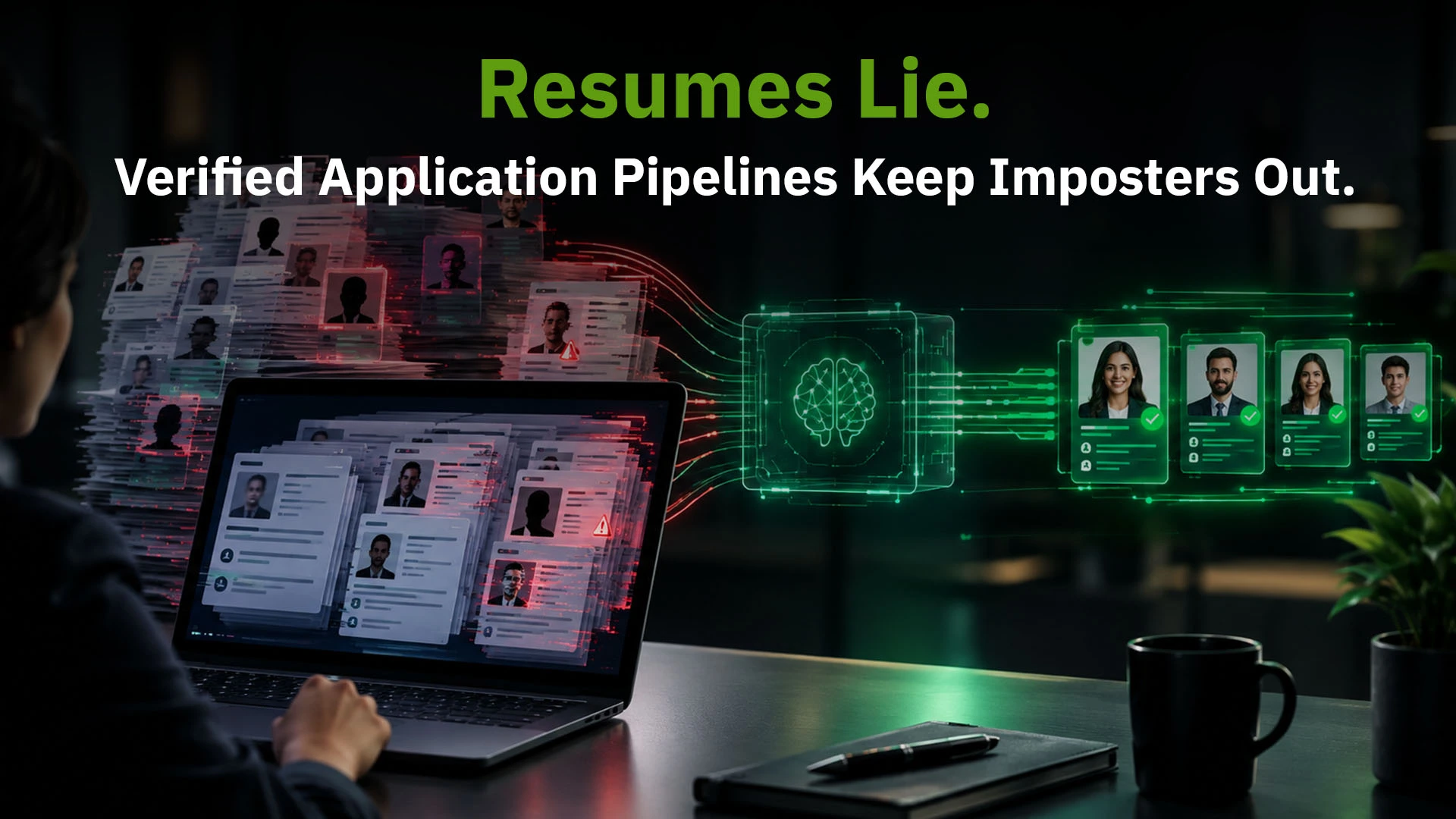
Octagnt catches candidate fraud at the application stage. It checks email authenticity, phone validity, and digital footprint. It flags AI-generated and synthetic applications before a recruiter sees them. If a candidate is not who they claim to be, verification surfaces that before any conversation starts.

Octagnt also cross-references employment history, stated roles, dates, and experience against real data. Resume fraud, inflated positions, and fabricated tenures surface in the audit at the application stage, not six months into onboarding.

Companies building this into their process now will not be explaining a costly mistake to their board. The ones still treating resume review as a sufficient filter will.

Try a Live Role for Free Now

Frequently Asked Questions (FAQs)

How widespread is resume fraud in hiring today?

Gartner projects 25% of applications could be fake by 2028. Fortune confirmed North Korean operatives passed screens at 100+ US firms. Bad hires cost up to 150% of annual salary.

What is the difference between resume embellishment and resume fraud?

Embellishment inflates facts. Fraud replaces them entirely — fabricated jobs, invented certifications, false credentials. AI collapsed the effort required, making the line between the two nearly impossible to enforce through reading alone.

How did AI make candidate fraud easier and harder to catch?

AI lets candidates generate fake employment histories, tailor cover letters, and pass ATS filters without any real underlying experience. AI-generated applications look identical to authentic ones, so traditional recruiter instincts no longer work.

What does application-stage verification actually catch?

It catches fake identities before interviews start — verifying email authenticity, phone validity, digital footprint, and flagging AI-generated or synthetic applications. Unlike background checks, it runs before any recruiter time gets spent.

What do companies actually risk by not catching resume fraud early?

A bad hire costs 30–150% of annual salary. In regulated industries, misrepresented credentials create legal exposure. Fortune reported North Korean hires accessed restricted data at 100+ US companies before detection.
Share this article

← Back to all articles

Ron Maitra

Ron Maitra is the CEO and Founder of Octagnt.ai. He writes about the hard problems in hiring — resume fraud, deepfake interviews, AI's erosion of trust, and what verification-first recruiting looks like as a fix.

LinkedIn