There was a version of this story where AI helped candidates.
Better formatting. Cleaner language. Stronger articulation of real experience. That version exists, and it is fine.
But that is not the dominant story of what AI did to the hiring pipeline in 2026. The dominant story is that AI made mass-producing false applications essentially free, effortless, and nearly undetectable by any tool that was built before this moment.
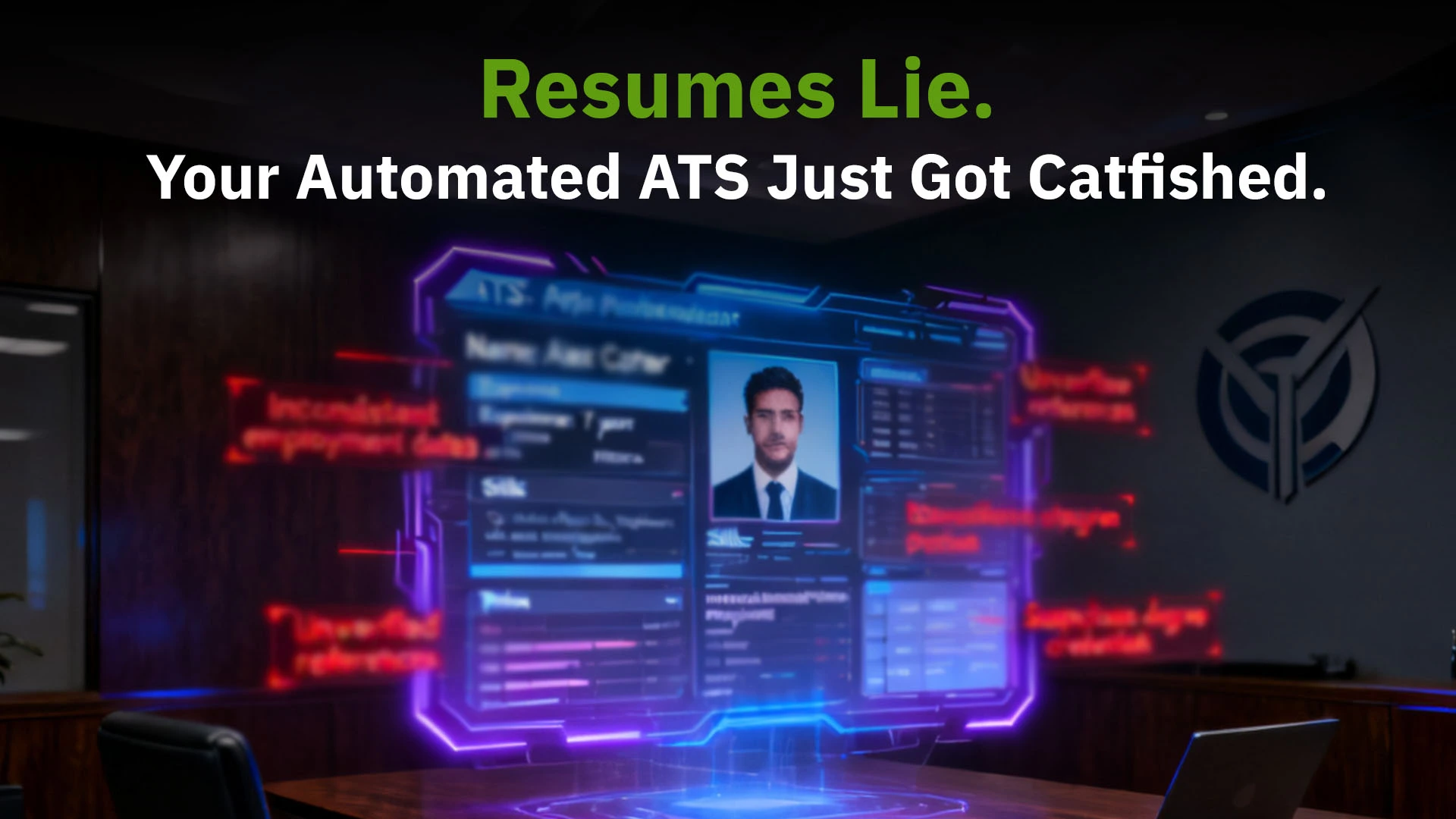
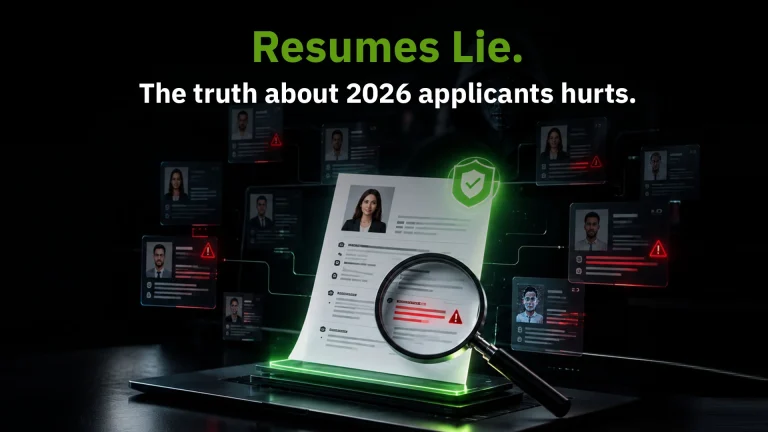
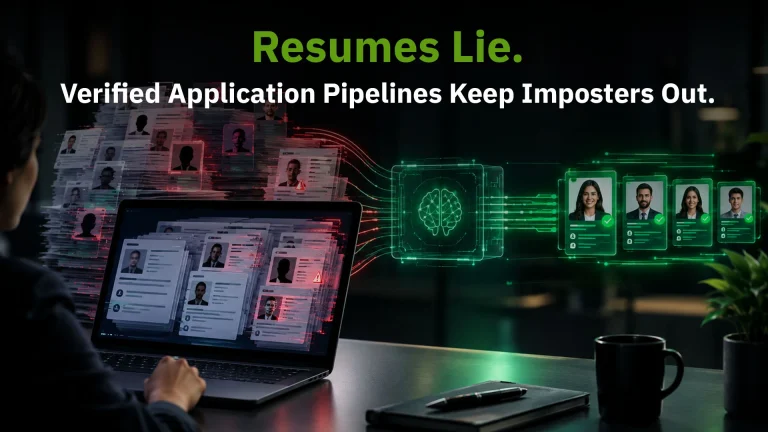
Right now, a single individual can generate fifty unique-looking resumes from one actual career history, swap surface details across each one, and submit all fifty to the same company using different email addresses. The ATS flags nothing. The recruiter sees fifty candidates. The real number is one.
And that is the optimistic version, the one where the underlying career history is real at all.
The BBC’s 2026 investigation into hiring pipeline fraud found that AI-generated application content now accounts for a significant and growing percentage of inbound applications at enterprise companies, with hiring teams largely unprepared to distinguish mass-produced submissions from genuine ones. Forbes reported this year that the average enterprise hiring funnel now requires twice the screening hours it did in 2023, with yield rates dropping sharply as duplicate and inflated profiles dilute pipeline quality. Gartner’s 2026 TA research calls this a structural integrity problem requiring a new category of verification infrastructure.
North Korean state-sponsored infiltration schemes using AI-polished synthetic identities drew fresh FBI alerts in 2026. That threat is real. So is the everyday version that operates across every industry without a government attribution.
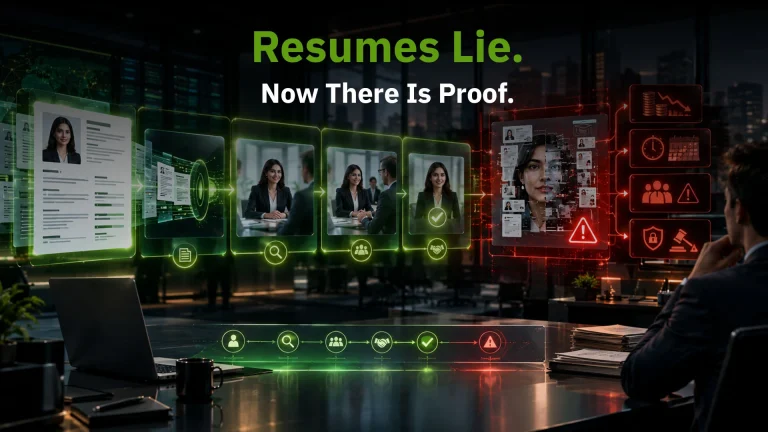
Resumes lie. Octagnt proves who is real by running a forensic audit on every candidate before they reach a human reviewer. Duplicate submissions get caught. AI-generated credentials get surfaced. Identity signals get verified. Role fit gets scored against evidence, not assertions. Every verified shortlist arrives in under 24 hours, evidence-backed, defensible, sealed with an immutable audit trail.
Hiring teams deserve to know what is real.
Try a Live Role for Free Now