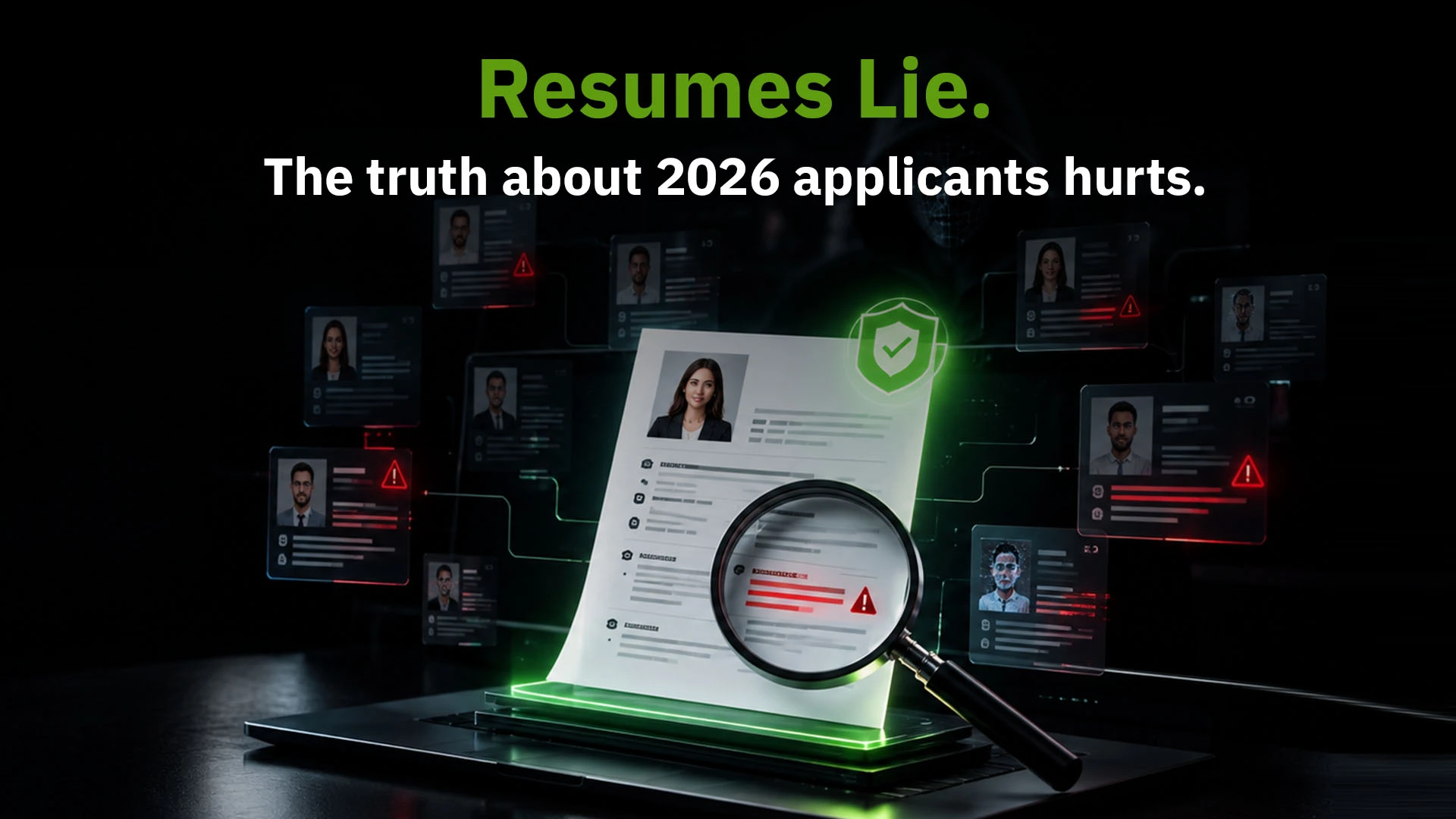
Anyone with internet access can generate a convincing resume for a job they have never held. That is the new baseline, and it is not speculative. A 2026 Forbes analysis of the candidate fraud landscape confirmed what recruiting teams had started seeing firsthand: AI tools have made resume misrepresentation so accessible that distinguishing fabricated from legitimate application materials is now genuinely difficult without independent verification. This is the documented state of the hiring funnel.
Gartner’s HR technology research for 2026 flagged the same reality from a systems perspective. The tools companies use to screen candidates, built and deployed before AI made content generation effortless, do not account for the volume or quality of fabricated materials now entering pipelines. Your ATS was designed for a world where creating a convincing false resume required meaningful effort. That world is gone.
The Guardian and BBC have covered the North Korean IT worker case as a national security story. It is also a hiring story. State-sponsored actors built complete fake professional identities and placed them into Western tech companies through standard application processes. The fraud worked because the hiring systems in place could not verify the people applying. Nothing in the standard process caught it. These were not sloppy applications. They were professional ones built on fabricated foundations.
Resume embellishment used to be the smaller version of the problem. A little inflation, a little selective memory about an exit date. Candidate fraud is the full version: an identity that was never real, performing as if it always was.
Resumes lie. In the AI era, they lie better than they ever have.
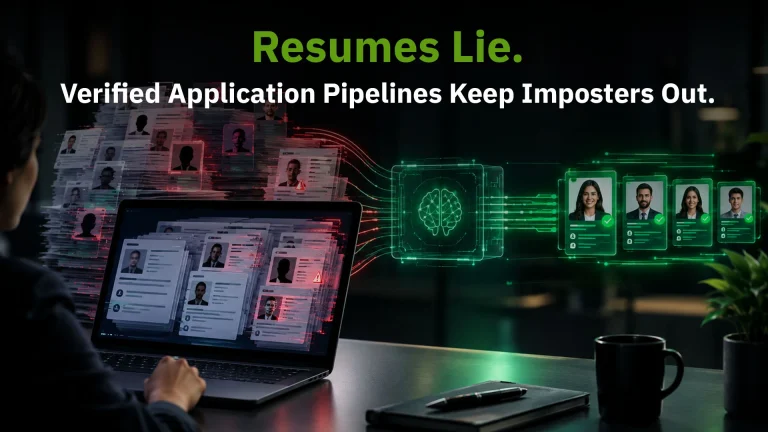
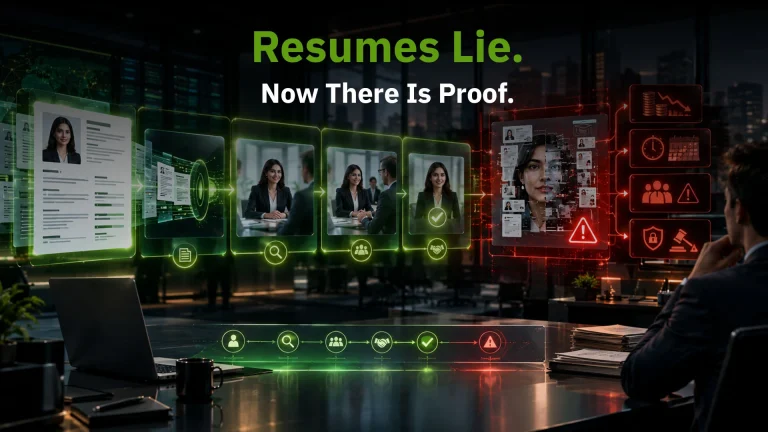
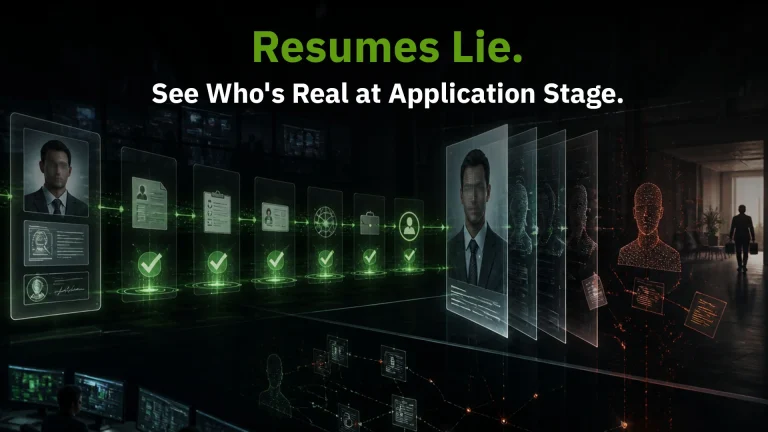
At the application stage, Octagnt verifies. Before any interview gets scheduled, Octagnt confirms who is actually applying and flags fabrications in real time. The fraud does not get an interview. It gets caught at the door. Every claim a candidate makes gets cross-checked against authoritative data. What they submitted gets tested against what actually exists in the record.
Your next interview round has someone in it who does not exist the way their resume says they do. That is not a theory. It is a probability the data has already confirmed.
Try a Live Role for Free Now