North Korean Fake Workers Are Exposing the Weakest Link in Modern Hiring
Frequently Asked Questions (FAQs)
What exactly counts as resume fraud versus normal resume embellishment?
Resume embellishment usually means stretching a title, rounding up a metric, or softening a gap. Resume fraud goes further: fabricated employers, invented degrees, work history that never happened, or an identity that isn't real at all.
How common is resume fraud actually, not just anecdotally?
More common than most teams assume. Gartner projects that by 2028, 1 in 4 job candidates will use AI to misrepresent themselves during hiring. Forbes reported in March 2026 that 65% of HR leaders already find it harder to verify real skills because of AI-generated applications.
Can ATS catch AI-generated or fabricated resumes?
Not reliably. Most ATS platforms are built to rank resumes against keywords and formatting, which is exactly what AI tools are optimized to produce. A fabricated resume built to match a job description often scores higher than an honest one, because the system was never designed to check whether the claims are true, only whether they look right.
Does resume fraud only affect large enterprises, or does it hit smaller teams too?
It hits everyone, often harder at smaller companies with fewer recruiters and less time per application. Cases involving North Korean IT worker schemes, reported by BBC News, show fabricated identities clearing standard checks at organizations of many sizes. Smaller teams frequently have the least capacity to catch what a resume isn't showing them.
When should candidate verification and validation happen in the hiring process?
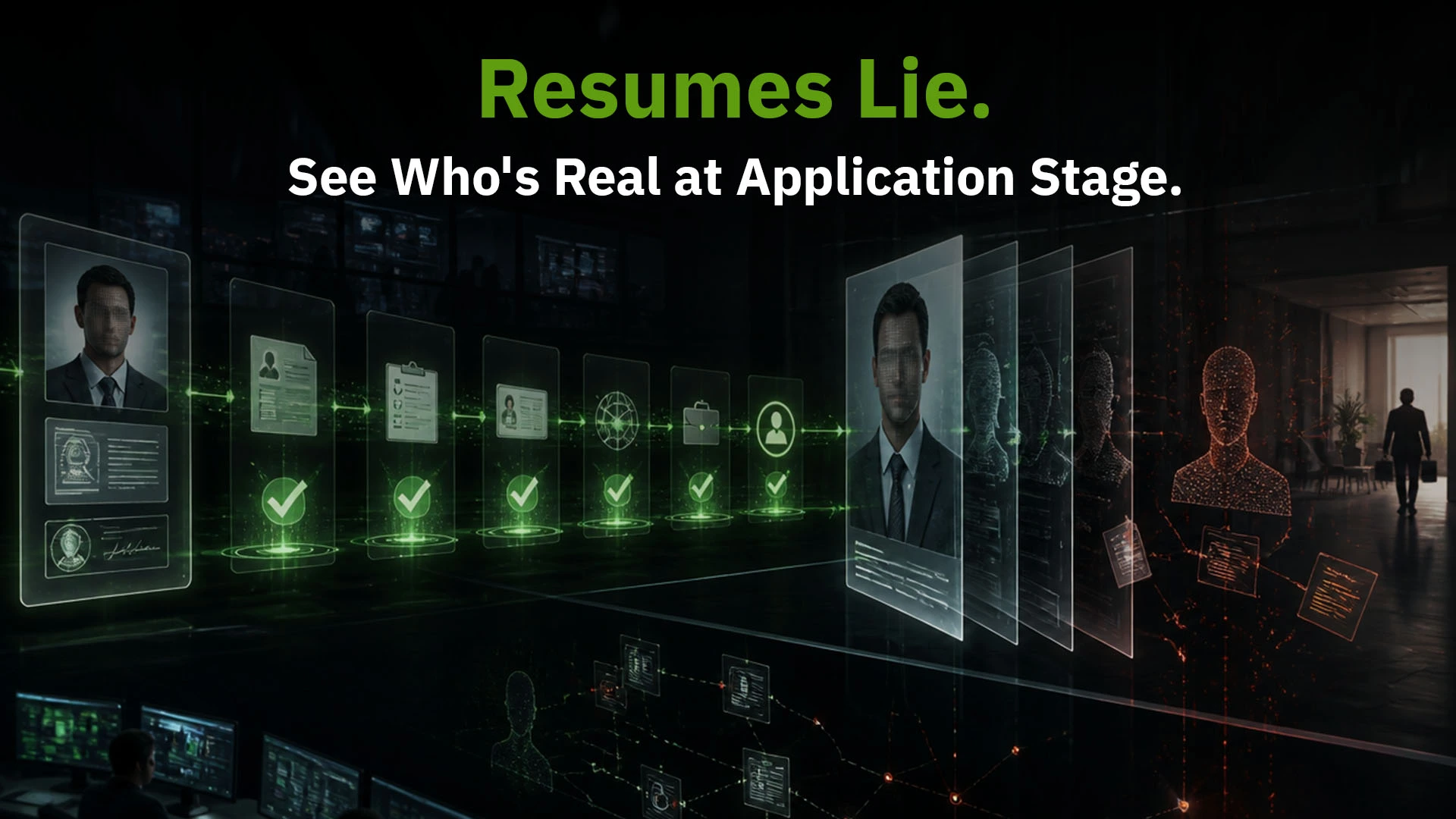
At the application stage, before an interview is scheduled and well before an offer goes out. Catching resume fraud after someone is already hired means absorbing the cost of a bad decision. Checking claims against evidence before a candidate enters the pipeline is what actually protects the process, not damage control after the fact.