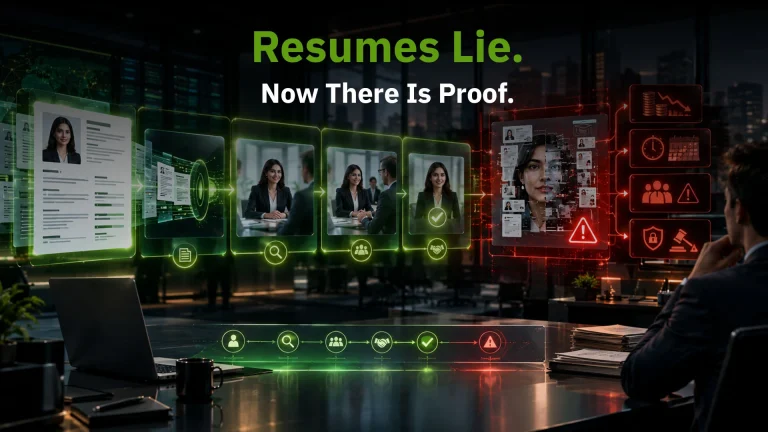
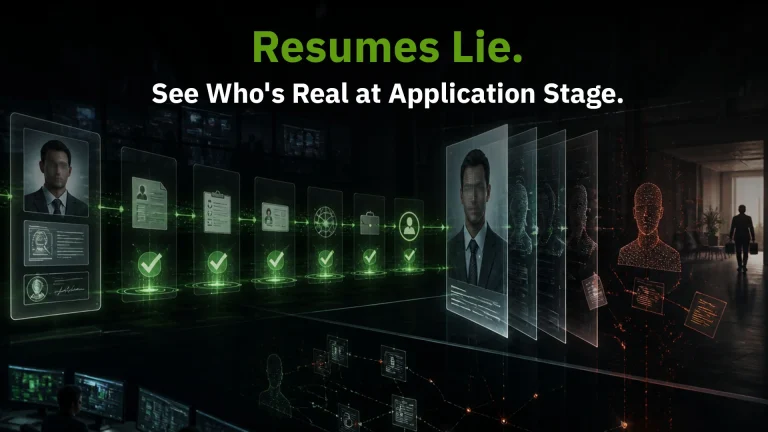
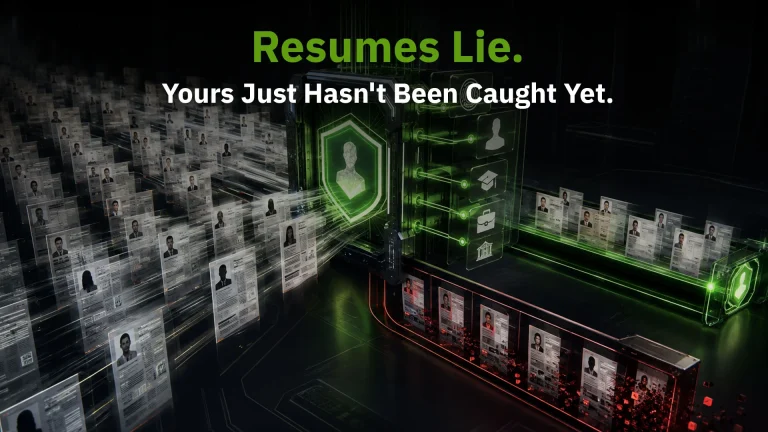
Why Application Stage Verification Has Become Non-Negotiable for Recruiters
Frequently Asked Questions (FAQs)
How widespread is resume fraud in hiring today?
Gartner projects 25% of applications could be fake by 2028. Fortune confirmed North Korean operatives passed screens at 100+ US firms. Bad hires cost up to 150% of annual salary.
What is the difference between resume embellishment and resume fraud?
Embellishment inflates facts. Fraud replaces them entirely — fabricated jobs, invented certifications, false credentials. AI collapsed the effort required, making the line between the two nearly impossible to enforce through reading alone.
How did AI make candidate fraud easier and harder to catch?
AI lets candidates generate fake employment histories, tailor cover letters, and pass ATS filters without any real underlying experience. AI-generated applications look identical to authentic ones, so traditional recruiter instincts no longer work.
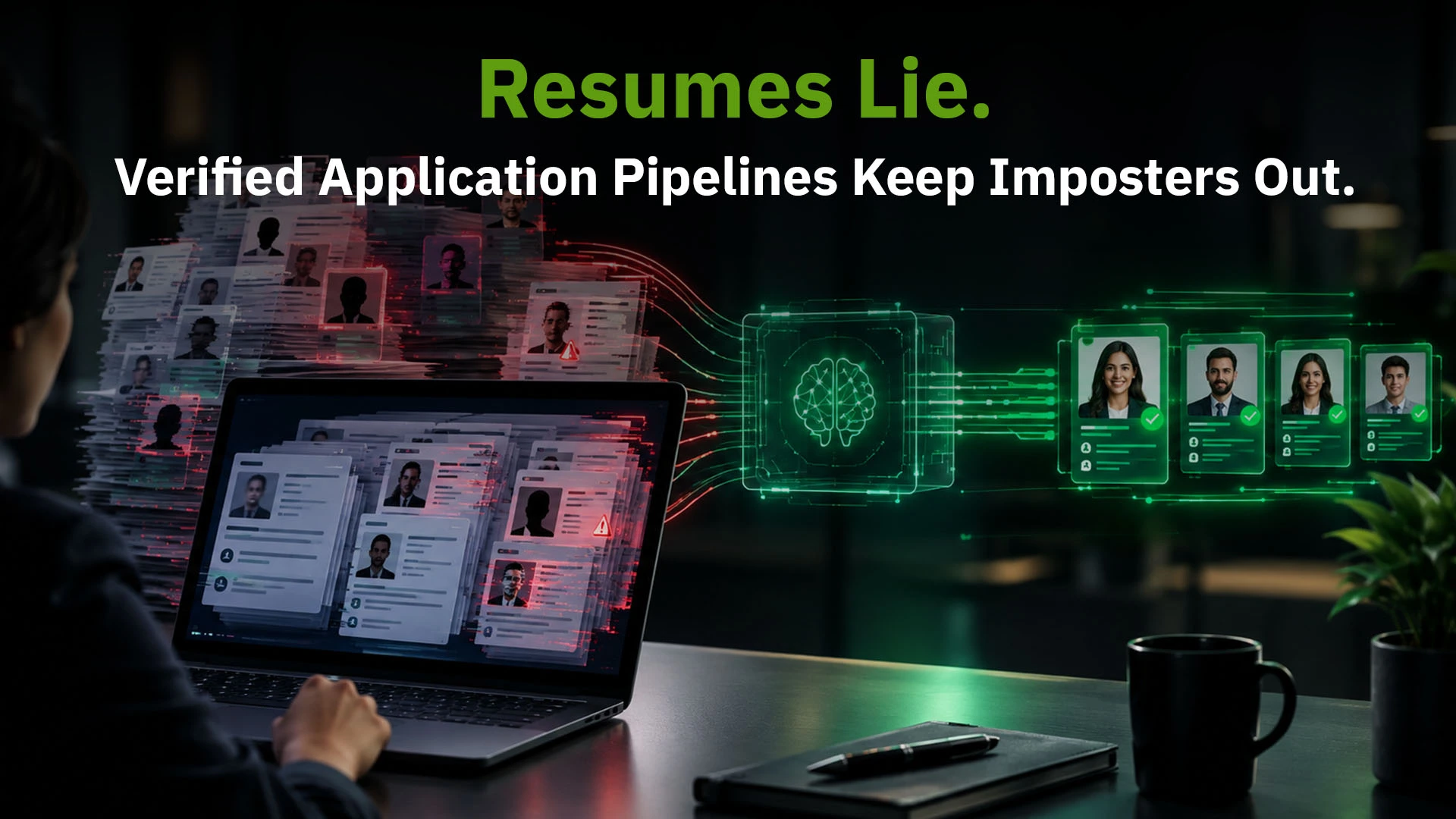
What does application-stage verification actually catch?
It catches fake identities before interviews start — verifying email authenticity, phone validity, digital footprint, and flagging AI-generated or synthetic applications. Unlike background checks, it runs before any recruiter time gets spent.
What do companies actually risk by not catching resume fraud early?
A bad hire costs 30–150% of annual salary. In regulated industries, misrepresented credentials create legal exposure. Fortune reported North Korean hires accessed restricted data at 100+ US companies before detection.