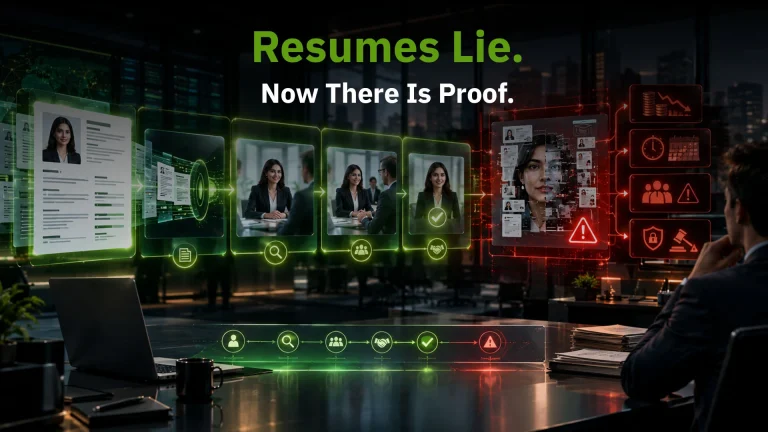
North Korea Got Into 309 US Companies Through Fake Resumes. What Is Your Evidence Layer?
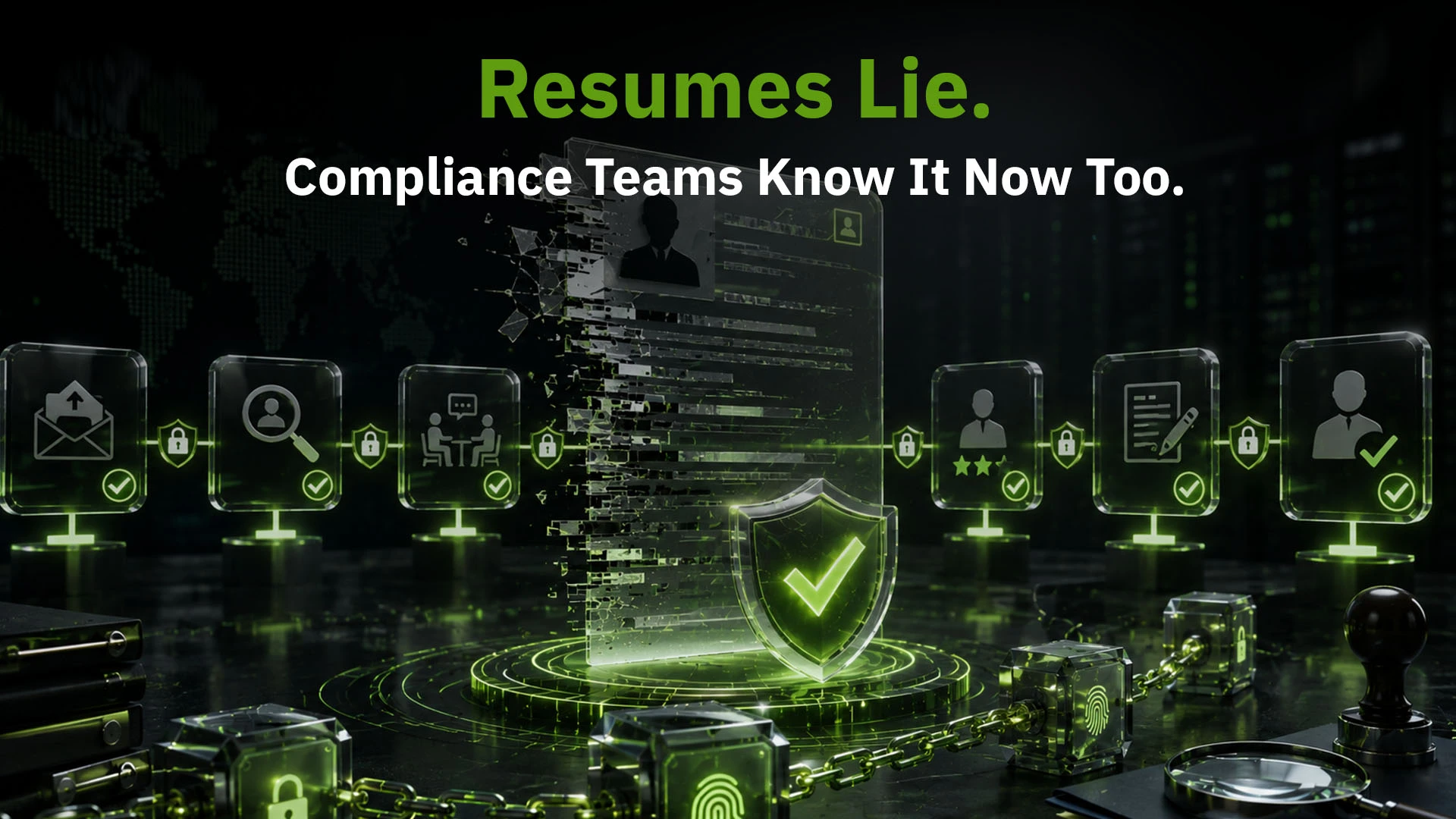
Why HR Leaders Are Being Forced To Defend Every Hire They Make

In August 2025, the BBC published testimony from a North Korean defector who used hundreds of fake identities to land remote IT jobs across the US and Europe. This was not a lone scam. It was a state-run operation, and the UN estimates North Korea’s IT worker schemes generate between $250 million and $600 million a year for the regime.

This is not hypothetical anymore. Amazon’s chief security officer disclosed in late 2025 that the company had blocked more than 1,800 suspected North Korean applicants since April 2024, with attempts growing 27% quarter over quarter. Pindrop’s CEO found that 1 in 343 of the company’s own job applicants traced back to North Korea. In one documented scheme, a single facilitator funneled more than $17 million in salaries to the regime through 309 unwitting US companies, including a Fortune 500 automaker, a Silicon Valley tech company, and an aerospace manufacturer.

These companies had ATS platforms. They had recruiters. They had reference checks. None of it caught what was happening at the application stage, because resumes and interviews are built to look convincing, not to prove identity.

Candidate fraud at this scale is a compliance issue, not just a hiring headache. Legal and compliance teams are asking harder questions about how candidates get screened before recruiters ever pick up the phone.

Octagnt exists to answer that question at the source.

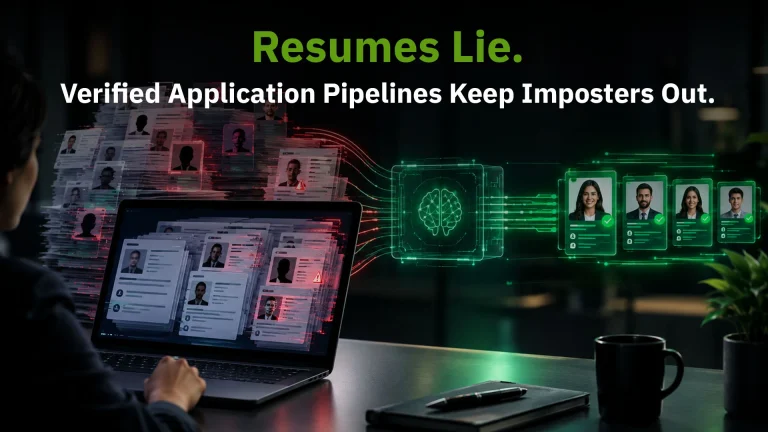
Octagnt verifies every applicant before a recruiter sees them, cross-referencing emails, phone numbers, employment timelines, and digital footprints to confirm a real, traceable human being is behind the application.

Octagnt validates the resume itself, running every claimed title, skill, company, and tenure through a 9-dimension forensic audit using 21 specialized AI agents across 106 evaluation vectors. Every shortlist comes with an immutable, SHA-256 sealed audit trail, fully defensible if anyone ever asks how a hire was made.

Hiring teams get a verified, hire-ready shortlist in under 24 hours, no integration needed to start, and the first requisition is free.

Try a Live Role for Free Now

Frequently Asked Questions (FAQs)

Is North Korean candidate fraud actually happening inside real US companies right now?

Yes, Amazon blocked over 1,800 suspected North Korean applicants since April 2024, with attempts rising steadily 27 percent each quarter.

Can a standard resume screening process catch a North Korean operative before the interview stage?

No, standard ATS platforms and recruiter reference checks completely failed to catch this fraud across 309 documented real US companies.

Does using Octagnt's verification step require integrating with an existing applicant tracking system first?

No, Octagnt sits directly on top of any existing ATS and requires no integration to start screening candidates immediately today.

Do compliance and legal teams accept "the resume looked strong" as sufficient proof for a hiring decision?

No, compliance and legal teams now require documented evidence and sealed audit trails, not opinions, to fully defend hiring decisions.
Share this article

← Back to all articles

Ron Maitra

Ron Maitra is the CEO and Founder of Octagnt.ai. He writes about the hard problems in hiring — resume fraud, deepfake interviews, AI's erosion of trust, and what verification-first recruiting looks like as a fix.

LinkedIn